There's a freelancer in Dhaka who writes better English than most native speakers. His code is clean, his designs are sharp, and his rates are competitive. He applied to 150 Upwork jobs in three months and got two replies.
There's another freelancer in Mumbai — similar skills, similar rates. She applied to 40 jobs in the same period and got 12 replies. Nine of them turned into discovery calls. She landed four clients.
The difference wasn't skill. It wasn't price. It was how they communicated.
This is the uncomfortable truth that nobody talks about: South Asian freelancers face a cultural communication gap with western clients. Not because your English is bad — but because the style of communication that's professional and polite in South Asia often comes across as stiff, vague, or desperate to clients in the US, UK, and Australia.
This article breaks down the specific patterns, where they come from, and exactly how to fix them.
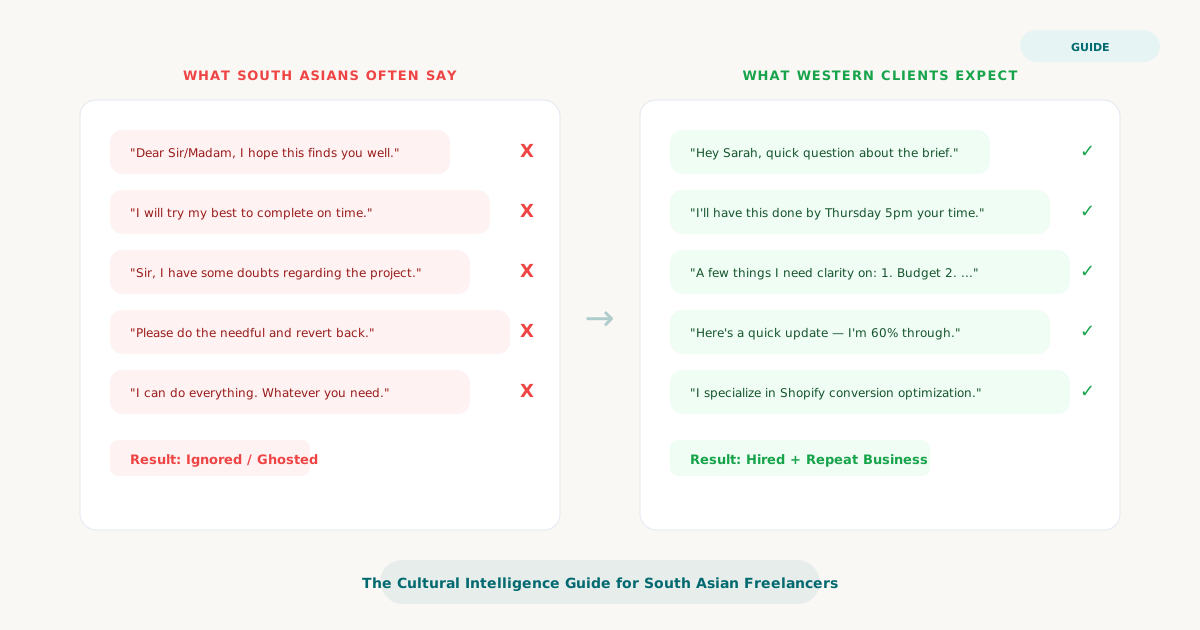
The 5 Communication Patterns That Kill Your Proposals
1. "Dear Sir/Madam" and Over-Formality
What you write: "Dear Sir/Madam, I hope this email finds you well. I am writing to express my interest in the advertised position."
What they read: "This person didn't bother to find my name and is sending the same message to everyone."
Western work culture — especially in the US and Australia — is dramatically less formal than South Asian work culture. Calling someone "Sir" or "Madam" in a freelance context feels weird to most western clients. It creates distance. It makes the relationship feel hierarchical rather than collaborative.
What to say instead: "Hey Sarah" or "Hi there" works perfectly. If you don't know their name, "Hi" alone is fine. No "Dear," no "Respected," no "Sir/Madam."
2. "I'll Try My Best"
What you say: "I will try my best to complete this by Friday."
What they hear: "There's a decent chance I won't finish by Friday."
In South Asian communication, "I'll try my best" is a polite way to show effort and humility. In western business culture, it's a hedge. It's interpreted as uncertainty. A commitment to "try" is not a commitment to deliver.
What to say instead: "I'll have this done by Friday 5pm your time." If you're not sure you can make it, say so directly: "I can realistically have this ready by Monday. Would that work?" Western clients vastly prefer honest timelines over optimistic promises.
3. "Please Do the Needful"
What you write: "Please do the needful and revert back at the earliest."
What they read: "???"
This phrase is standard Indian English and makes perfect sense in South Asian business communication. But western clients genuinely don't understand it. They don't know what "the needful" is, and "revert back" (meaning "reply") confuses them because "revert" in American/British English means "to go back to a previous state."
What to say instead: Be specific. "Could you review the mockup and let me know your feedback by tomorrow?" Direct, clear, and tells them exactly what you need.
Related: This article covers the basics of the cultural intelligence framework. SkillsToUSD Pillar 2 goes deeper with discovery call scripts, objection handling, and the full communication system. See the Full Program →
4. Over-Promising and Under-Delivering
What you say: "Yes, I can do that. No problem. I can handle everything."
What happens: You take on work you're not sure about, get overwhelmed, miss the deadline, and deliver something that's not quite right.
This comes from a culturally embedded reluctance to say "no" — especially to authority figures or clients. In South Asian business culture, saying "no" or admitting you can't do something can feel disrespectful. So you say "yes" to everything.
Western clients would much rather hear "that's outside my expertise" or "I can do A and B but I'd need help with C" than discover the problem after the deadline has passed.
What to say instead: "I'm confident with the front-end work, but for the backend database migration, I'd want to bring in someone with more PostgreSQL experience. Want me to handle the parts I'm strong on and recommend someone for the rest?"
This builds more trust than claiming you can do everything.
5. Not Updating Until Asked
What you do: Work silently for a week, then deliver the finished product.
What they experience: Radio silence and anxiety. "Did they abandon the project? Are they stuck? Should I message them?"
Western clients — especially American ones — expect proactive communication. They want updates before they have to ask. The principle is simple: update before they ask.
What to say instead: Send a brief update every 2-3 days, even if there's nothing dramatic to report: "Quick update — I'm about 60% through the redesign. The homepage and about page are done. Working on the product pages now. On track for Thursday delivery."
This takes 30 seconds to write and completely transforms how the client perceives you.
British vs American vs Australian Clients
Not all western clients are the same. Here are the key differences:
American Clients
- Communication style: Direct, enthusiastic, positive feedback is common
- What "great job" means: It actually means great job. Americans give genuine positive feedback.
- Red flag language: "Let's circle back" or "interesting approach" — these can be polite ways of saying "no"
- Tip: Match their energy. Americans like freelancers who are engaged and responsive, not just technically competent.
British Clients
- Communication style: Understated. British clients use irony and understatement. "That's quite good" might mean "it's acceptable." "That's interesting" might mean "I don't like it."
- What "not bad" means: This is actually a compliment.
- Red flag language: "I wonder if perhaps..." — this isn't a suggestion, it's a request for a change
- Tip: Read between the lines. British clients expect you to pick up on subtlety.
Australian Clients
- Communication style: Casual, direct, informal. Australians are allergic to pretension.
- What to expect: First-name basis from the start, casual language, sometimes blunt feedback
- Tip: Don't be overly formal. Australians respect competence but dislike formality. "Hey mate" is perfectly professional.
SkillsToUSD Pillar 2 — "Cracking the Western Client Code" — is an entire module on cultural intelligence. It includes client communication scripts for US, UK, and Australian clients, the "proactive update" templates, and the discovery call system. Starting at INR 2,999 with a 60-day money-back guarantee.
The "Proactive Update" System
This is the single highest-impact communication habit you can adopt. Here's a template:
For a multi-day project:
Hi [Client Name] — quick progress update:
Done: Homepage design, mobile responsive version In progress: Product page templates (about 70% done) Next: Shopping cart and checkout flow Timeline: Still on track for [date] delivery
One question: [specific question about the project]
— [Your name]
Send this every 2-3 days. It takes 60 seconds to write. The impact is enormous:
- The client never has to chase you
- You demonstrate organization and professionalism
- Problems surface early (through the "one question" section)
- You build trust through visibility
Riya P., a social media manager in Delhi, told us: "The proactive update changed everything. My first client literally said 'you're the most professional freelancer I've worked with' — and all I did was send a 3-line update every 48 hours."
Common Email Phrases: South Asian vs Western
| Instead of... | Write... |
|---|---|
| "Dear Sir/Madam" | "Hi [Name]" or "Hey [Name]" |
| "I hope this finds you well" | Just skip it. Start with the point. |
| "I'll try my best" | "I'll have this done by [date]" |
| "Please do the needful" | "Could you [specific action] by [date]?" |
| "Kindly revert back" | "Let me know what you think" |
| "I have a doubt" | "I have a question" |
| "I can do anything" | "I specialize in [specific thing]" |
| "Respected client" | [Their first name] |
| "I assure you" | Show, don't tell — reference past work |
| "Please give me a chance" | "Here's what I'd do for this project..." |
The Bottom Line
The cultural communication gap isn't about your English being "bad." It's about style. South Asian business communication is formal, hierarchical, and relationship-oriented. Western freelance communication is casual, direct, and results-oriented.
Neither is better. But when you're selling to western clients, you need to communicate in a way that builds trust in their cultural framework, not yours.
The good news: these are small changes. Use their first name. Be specific about timelines. Update proactively. Say "no" when you should. Within a few weeks, it becomes natural.
And the results speak for themselves.
This article is a preview of the cultural intelligence framework in SkillsToUSD Pillar 2. The full program includes discovery call scripts, communication rhythm guides, the Objection Override system, and 20+ email/Slack templates for every common situation — from onboarding a new client to handling a missed deadline.
Your First USD Client Is 30 Days Away
Join 1,247+ South Asian freelancers earning internationally. The complete system includes 25 modules, 50+ templates, the Payment Bible, and weekly live Q&A.
Starting at INR 2,999 · 60-day guarantee · Lifetime access