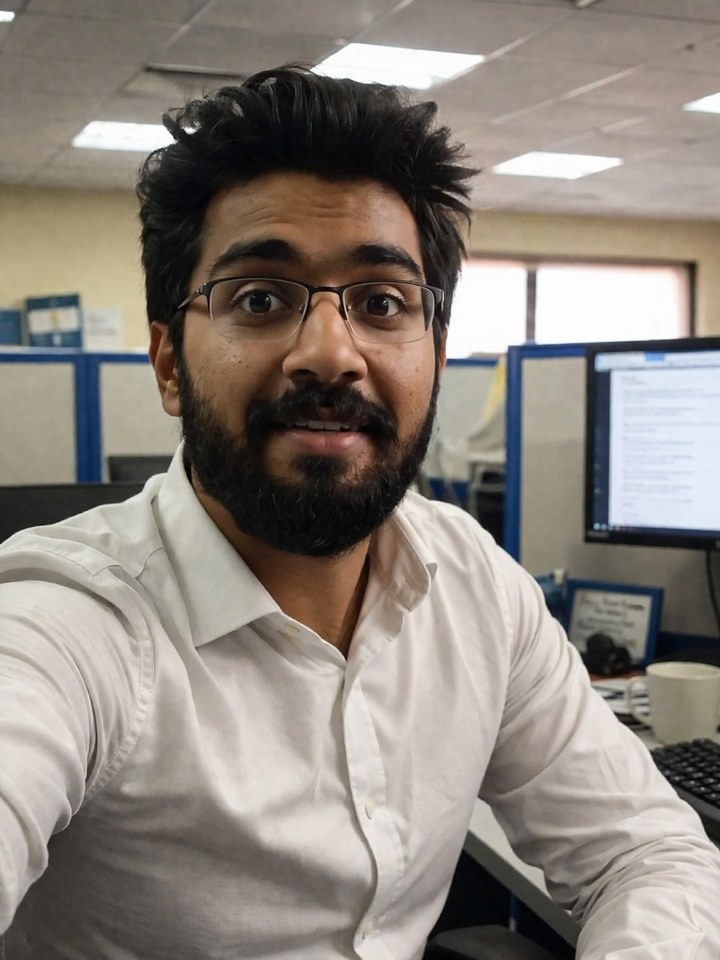
I need to start this by saying: I almost didn't sign up. I'd been burned three times before. Three courses, roughly INR 15,000 gone, and nothing to show for it. When my friend Arjun sent me the SkillsToUSD link, my first reaction was, "Bro, not this again."
I'm glad he pushed me on it. Eight months later, I'm earning $2,700/month editing videos for three US-based YouTube creators. That's about INR 2,24,000 — more than I've ever made in my life, and I do it from my bedroom in T. Nagar, Chennai.
But I think the more useful thing I can share isn't the success. It's the skepticism. Because if you've bought courses before and they didn't work, you probably think everything is a scam. I thought that too. Here's why this one was different.
The Three Courses That Didn't Work
I should tell you what I tried before so you understand where my head was at.
Course 1: Udemy "Freelancing Masterclass" — INR 499
I bought this in late 2023 when I was 27. It was one of those courses that goes on "sale" for INR 499 every other week. The instructor was American, and the advice was entirely US-centric. "Build your personal brand on LinkedIn." "Attend local networking events." "Get referrals from your professional network." None of this was wrong, exactly, but none of it addressed the reality of freelancing from Chennai. I didn't have a US professional network. Local networking events in T. Nagar weren't going to connect me with YouTube creators in Los Angeles.
Course 2: Indian YouTube guru's course — INR 4,999
This one hurt more because it was more money. The guy had 500K subscribers and posted videos about "How I Earn 10 Lakhs/Month Online." His course was basically: create a YouTube channel, grow it to 100K subscribers, monetize with AdSense and sponsorships. The irony of buying a course about how to earn money online from a guy who earns money by selling courses about earning money online didn't hit me until later. I never made a single rupee from this.
Course 3: Instagram ad course — INR 9,999
The most expensive and the most useless. Some guy in a rented BMW running Instagram ads for his "mentorship program." The program was a WhatsApp group with 200 people and a Google Drive folder of PDFs. The PDFs were copied from free blogs — I found the original articles later by googling sentences from them. The WhatsApp group was mostly people asking questions that never got answered. I asked for a refund; he stopped responding.
Total lost: approximately INR 15,500. That's real money when you're earning INR 30,000-40,000 a month.
So when Arjun sent me the SkillsToUSD link, I spent two hours looking for reasons not to sign up. I checked for copied content, fake testimonials, rented BMWs. What I found instead was specific, South Asian-focused content that addressed problems I actually had. And a 60-day money-back guarantee that — I checked — was actually honored, based on other people's comments.
I signed up for the Starter plan at INR 2,999. If it was a scam, I'd lose less than I lost on the Instagram course.
My Background: Wedding Videos and Corporate Events
I'm 29, self-taught in video editing. I never went to film school. I learned Premiere Pro and After Effects from YouTube tutorials when I was 21, editing short films with my college friends at Loyola College. After graduating, I couldn't find a job in "film" — because that's not really a job you just find in Chennai — so I started doing wedding videos.
Wedding video editing in Chennai pays alright, but it's brutal work:
My Typical Monthly Income (Pre-SkillsToUSD)
| Work | Rate | Volume | Monthly Total |
|---|---|---|---|
| Wedding highlight reels (4-6 min) | INR 5,000-8,000/video | 2-3 weddings | INR 10,000 - 24,000 |
| Full wedding edits (30-60 min) | INR 12,000-15,000/video | 1-2 weddings | INR 12,000 - 30,000 |
| Corporate event videos | INR 5,000-8,000/video | 0-2 events | INR 0 - 16,000 |
| Total | INR 22,000 - 70,000 |
The problem is the range. Good months (October-February, wedding season) could hit INR 50,000-70,000. But April-August? I'd sometimes make INR 22,000. One month I made INR 15,000. Try paying Chennai rent on INR 15,000.
The work itself was exhausting. Wedding videos mean handling 6-8 hours of raw footage per event, syncing multiple camera angles, color grading inconsistent lighting (temple ceremonies to outdoor receptions to hotel banquet halls), and dealing with relatives who want "more of aunty's speech" in the final edit. Every wedding is a full week of editing.
And I was good at it. My clients were happy. I had a 4.8/5 rating on Google. Referrals came in during season. But I could see the ceiling: even the most successful wedding videographers in Chennai top out at INR 80,000-1,00,000/month during peak season, and that requires a team, equipment investment, and constant hustle.
I wanted something more stable. Something that didn't depend on wedding season.
Related: Vikram used the SkillsToUSD positioning framework to shift from "video editor" to a specialized niche that western clients actively search for. See the Full Program →
What Was Different About SkillsToUSD
I want to be specific about this because "what makes this course different" is the question every skeptic asks, and vague answers don't cut it.
1. It was built for South Asians, not adapted from a western course.
Every other course I'd taken was either made for Americans or made by Indians who copied American content. SkillsToUSD addressed things that are specifically relevant to freelancers in India, Pakistan, and Bangladesh: the communication style gap, the payment platform confusion (Wise vs Payoneer vs bank wire — I had no idea which to use), the pricing psychology when you're used to thinking in rupees, the imposter syndrome of pitching to clients in countries with 10x your cost of living.
2. The Cultural Intelligence module was not something I'd seen anywhere else.
Pillar 2 — Cultural Intelligence — covered things like: why "I'll try my best" sounds weak to American clients (they hear uncertainty, not politeness), why you should never address someone as "Sir" or "Ma'am" on a platform like Upwork (it creates a power dynamic that makes them uncomfortable), and how the pace of casual-professional communication works in different western countries.
This sounds like small stuff. It's not. These are the things that make a client unconsciously think "this person gets it" or "this person is going to be hard to work with." And nobody had ever explained them to me before.
3. The WhatsApp community had people who were actually earning.
The previous WhatsApp group I was in (from the Instagram course) was 200 people asking questions into a void. The SkillsToUSD community had people posting screenshots of their Wise transfers, sharing what proposals worked, asking specific questions about client situations, and getting responses from both the team and other members. It felt like a group of people figuring it out together, not a ghost town.
4. The 60-day guarantee was real, and that changed my psychology.
Knowing I could get my money back for two full months meant I didn't approach it with "I hope this works" energy. I approached it with "Let me actually try everything they suggest and see what happens" energy. That's a completely different mindset.
The Repositioning
The course told me to stop calling myself a "video editor." That label puts you in a bucket with millions of people who can cut clips together in CapCut. It's a commodity skill with commodity pricing.
Instead, I needed to get specific about who I edited for and what I delivered. The framework was: [Specific Output] for [Specific Client Type].
I knew YouTube. I watched YouTube constantly. I understood pacing, retention, hooks, b-roll usage, sound design for engagement. I'd never edited for a YouTuber before, but I understood the format deeply because I consumed so much of it.
So I repositioned as: YouTube Content Editor — Shorts, Long-form, and Thumbnails.
Not "video editor." A YouTube content editor. And I listed the specific deliverables: short-form cuts (YouTube Shorts, TikTok repurposes), long-form edits (10-30 minute videos), and thumbnail design. This told potential clients exactly what they'd get.
I rewrote my Upwork profile completely:
- Title: YouTube Content Editor | Long-Form, Shorts & Thumbnails
- Overview: Instead of listing software I knew, I wrote about the types of YouTube channels I could help: educational, fitness, tech reviews, lifestyle. I talked about retention-focused editing — cutting for pacing, adding visual interest to keep viewers watching, structuring the first 30 seconds for hook and payoff.
- Portfolio: I didn't have YouTube client work yet, so I took three popular YouTube videos (with permission from the creators, who were small Indian channels), re-edited 2-minute segments in my style, and uploaded them as portfolio samples. Each one had a before/after comparison showing how my edit improved pacing and visual engagement.
The First Client: A Fitness YouTuber From Dallas
My first real client came from an Upwork proposal in August 2025. A fitness YouTuber based in Dallas, Texas — about 180K subscribers — posted a job for a video editor who could handle 8 videos per month (4 long-form, 4 Shorts).
My proposal opened with something like:
Hey Marcus, I watched your last three videos and I think your content is solid but your editing is leaving views on the table. The hook on your deadlift form video takes 18 seconds to get to the point — YouTube analytics probably shows a big drop-off in the first 30 seconds. I can help fix that.
I specialize in editing for fitness YouTube channels. Here's a re-edit I did of a similar video that shows my approach: [link]
I can handle your 8 videos/month. Happy to do a trial video first so you can see the quality before committing.
He responded the same day. We did a trial: I edited one of his existing raw videos for $50. He liked it enough to start a monthly retainer: $500/month for 8 videos.
$500 for 8 videos was $62.50 per video. Was that a lot by US standards? No — American editors charge $200-500 per video. But for my first international client, it was transformative. INR 41,500/month from one client, for work I could do in about 3-4 hours per video.
Building to $2,700/Month
After Marcus, things accelerated. Having one US client on your Upwork profile changes everything. Your JSS score goes up. You have a real review. You have proof.
Vikram's Growth Timeline
| Month | Clients | Monthly Income (USD) | Monthly Income (INR approx.) |
|---|---|---|---|
| Month 1 (Aug 2025) | 1 (trial video) | $50 | ~INR 4,150 |
| Month 2 (Sep 2025) | 1 (retainer started) | $500 | ~INR 41,500 |
| Month 4 (Nov 2025) | 2 clients | $1,200 | ~INR 99,600 |
| Month 6 (Jan 2026) | 3 clients | $2,200 | ~INR 1,82,600 |
| Month 8 (Mar 2026) | 3 clients (rates increased) | $2,700 | ~INR 2,24,100 |
My second client was a tech review YouTuber from San Francisco (got him through Upwork in November). $700/month for 6 long-form videos. My third was an educational content creator from London who found me through my LinkedIn — I'd started posting short clips of my editing process, before-and-after comparisons, and tips about YouTube retention. She pays $500/month for 4 videos.
In February 2026, I raised my rate with Marcus from $500 to $1,000/month. I was nervous about it, but the course had a specific framework for rate increases: show the results you've delivered, propose the new rate with a clear justification, and give them time to decide. Marcus's channel had grown from 180K to 240K subscribers since I started editing for him. His average view duration had increased by 22%. The rate increase was justified, and he agreed without pushback.
With the tech reviewer, I also renegotiated in March 2026: from $700 to $1,200/month for 8 videos (he wanted more content). So my current breakdown is:
- Marcus (fitness, Dallas): $1,000/month
- Tech reviewer (San Francisco): $1,200/month
- Educational creator (London): $500/month
- Total: $2,700/month (~INR 2,24,100)
SkillsToUSD includes the positioning framework, proposal templates, rate increase scripts, and the Cultural Intelligence module that Vikram credits with his turnaround. Starting at INR 2,999 with a 60-day money-back guarantee.
The Practical Details
My setup: I work from my bedroom in T. Nagar, Chennai. My desk is a wooden table from Pepperfry. I have a custom-built PC (Ryzen 7 5800X, RTX 3060, 32GB RAM) that I built for about INR 85,000 in 2023 — it was originally for gaming but it handles Premiere Pro and After Effects well. Two monitors (a 27-inch main and a 24-inch secondary). Audio-Technica ATH-M50x headphones for audio editing. My total setup cost was about INR 1,15,000 over two years.
Software: Adobe Premiere Pro and After Effects (INR 1,675/month for the All Apps plan), Photoshop for thumbnails, Frame.io for client review (clients share this cost). I also use DaVinci Resolve for color grading on some projects.
Work schedule: I edit about 5-6 hours a day, six days a week. Each long-form video takes 3-5 hours depending on complexity. Shorts take about 1-1.5 hours each. Thumbnails take 30-45 minutes. My total workload is roughly 18-20 videos per month across all three clients, plus thumbnails.
Payments: I use Wise for Marcus and the tech reviewer (they pay via Wise's US bank details), and Payoneer for the London client (she preferred it). Wise conversion to INR costs about 0.6-0.7%. Payoneer is slightly more expensive at about 1-2% total. I transfer to my ICICI Bank account. Wise deposits hit within a day; Payoneer takes 2-3 days.
Taxes: I file under "Income from Business and Profession" as a freelancer. My CA handles the ITR filing. International service income is zero-rated for GST purposes (export of services), but I'm registered for GST since my turnover crossed INR 20 lakhs. I set aside about 20-25% of my income for taxes. After taxes, rent (INR 14,000 for my portion of a 2BHK with my brother), food, and expenses, I save about INR 1,00,000-1,20,000 per month.
Time zones: This is the one genuine downside. US Pacific Time is IST -12.5 hours. My Dallas and San Francisco clients sometimes need a call at 10 PM or 10:30 PM IST. It doesn't happen every day, but maybe once or twice a week. The London client is only IST -4.5 hours, which is much easier — her end of day is my late evening.
What I'd Tell the Skeptics
Because I was one. Here's what I'd say to someone who's bought courses before and gotten burned:
The 60-day guarantee removes the risk. This isn't a philosophical argument. It's math. If the course doesn't work for you within 60 days, you get your money back. The Starter plan is INR 2,999. If it works, it pays for itself with your first small project. If it doesn't work, you're not out anything. That's a fundamentally different proposition than a no-refund course.
Check if the advice is South Asian-specific. This is my filter now for any educational content. If the advice could apply to anyone anywhere in the world, it's too generic to help you. The challenges of freelancing from Chennai or Dhaka or Lahore are specific. The payment platforms are different. The communication style gap is specific. The imposter syndrome has specific cultural roots. If a course doesn't address these things, it wasn't made for you.
Look for specificity, not motivation. Bad courses are heavy on motivation and light on specifics. "Believe in yourself!" "You can do it!" "Hustle harder!" Good courses tell you: change your Upwork title to this format, structure your proposal with these five elements, use Wise instead of SWIFT because the fees are X% lower, when a client says this they actually mean that. Specifics. Actionable steps. Things you can do today.
One client changes everything. I know it sounds like motivational talk, but it's structural. When you have one international client paying you in USD, your Upwork profile changes (you have reviews and earnings), your confidence changes (you know you can do it because you've done it), and your income floor changes (even if everything else falls apart, you have that retainer). The hard part is getting from zero to one. After one, momentum helps.
What I Still Do Differently Than Before
The biggest lasting change isn't a technique or a platform. It's how I think about my work.
Before SkillsToUSD, I thought of myself as someone who could edit video — a pair of hands that could operate software. I priced myself like a commodity: "How cheaply can I do this compared to the next person?"
Now I think of myself as someone who helps YouTube creators grow their channels. The editing is the delivery mechanism, but the value is audience growth, better retention, more views. When I pitch to a new client, I don't say "I can edit your videos." I say "I can help your videos perform better." One is a service. The other is a result.
That shift — from selling a service to selling a result — is worth more than any technical editing skill I have. And it came directly from the course.
I'm still in the WhatsApp community. I try to help newer members when they have questions about video editing specifically, because I remember what it felt like to be skeptical and stuck. The community isn't perfect — it's a WhatsApp group, not a university — but having people who understand your exact situation is worth a lot when you're figuring this out alone from a bedroom in Chennai.
The Numbers, One Year In
Let me close with the plain numbers, because that's what I would have wanted to see when I was deciding whether to sign up.
| Metric | Before (Jul 2025) | Now (Mar 2026) |
|---|---|---|
| Monthly income | INR 30,000-40,000 (seasonal) | $2,700 (~INR 2,24,100) |
| Income stability | Wildly variable (wedding season dependent) | Stable monthly retainers |
| Working hours | 8-10 hrs/day, 6 days | 5-6 hrs/day, 6 days |
| Work type | Wedding videos, corporate events | YouTube content for US/UK creators |
| Payment method | Cash/UPI from local clients | Wise/Payoneer in USD |
| Courses purchased before | 3 (total cost ~INR 15,500) | SkillsToUSD Starter (INR 2,999) |
| Monthly savings | INR 0-5,000 | INR 1,00,000-1,20,000 |
I spent INR 2,999 on SkillsToUSD. My first month's retainer was $500. The course paid for itself roughly 14 times over in the first month alone.
I'm not saying this to hype the course. I'm saying it because I almost didn't buy it, and the reason was that I'd been burned before. If you're in the same position — skeptical, burned, wondering if this is just another scam — I get it. I was you. The difference is that this time, the advice was specific, practical, and designed for people like us.
The worst case? You use the 60-day guarantee and get your INR 2,999 back. The best case? You're editing for international clients within a few months, earning more than you thought was possible from your city.
For me, the best case happened. I still can't quite believe it sometimes, sitting at my desk in T. Nagar at 11 PM after a call with a client in San Francisco. But the Wise transfers are real, and the bank balance doesn't lie.
Vikram T. is a YouTube content editor based in Chennai, India. He works with US and UK YouTube creators on long-form videos, Shorts, and thumbnail design. This story was shared in February 2026.
Your First USD Client Is 30 Days Away
Join 1,247+ South Asian freelancers earning internationally. The complete system includes 25 modules, 50+ templates, the Payment Bible, and weekly live Q&A.
Starting at INR 2,999 · 60-day guarantee · Lifetime access