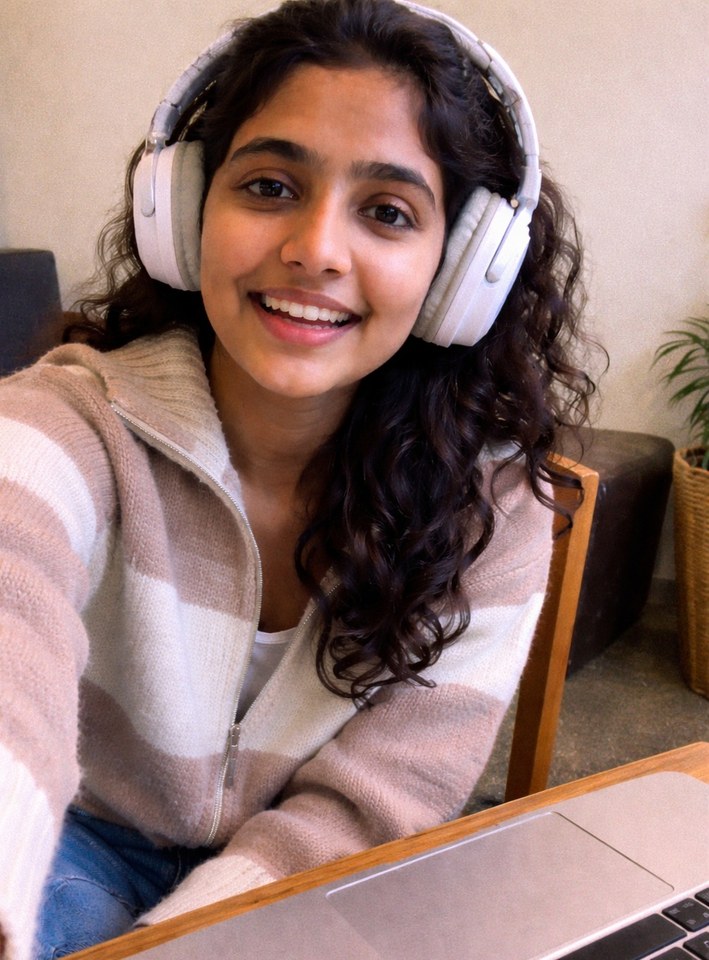
I used to wake up at 7 AM, take a CNG auto from my apartment near Agrabad to a printing shop in Chawkbazar, and spend three hours arguing about a logo revision that would pay me BDT 1,500. That's about $14.
This was my life for almost two years after graduating from the University of Chittagong with a BFA in Fine Arts. I was 24, living with my parents in a two-bedroom flat, and my entire professional identity was "the girl who makes logos for local shops."
I want to be honest about where I was, because I think a lot of designers in Bangladesh are in the same place right now, and it helps to know that someone else has been there.
The BDT 18,000 ceiling
Let me break down what my income actually looked like in early 2025.
I had a handful of regular clients — a garments supplier in Nasirabad, two restaurants near GEC Circle, a tuition center in Halishahar. They'd call me when they needed a new banner, a business card design, or a social media post for Eid promotions. The work was steady but small.
A typical logo job paid BDT 1,500 to 2,500 ($14-23). Business card designs were BDT 800-1,200. Social media posts — maybe BDT 500 each if I was lucky. My best month ever was BDT 22,000 (about $200). My average was closer to BDT 18,000 ($165).
I was using a secondhand Dell laptop with 8GB RAM running a cracked version of Illustrator. I knew this wasn't sustainable, but I didn't see another option. Everyone I knew in design was either doing the same thing or had moved to Dhaka for agency jobs paying BDT 25,000-30,000 — barely more, with triple the living costs.
The Fiverr experiment
In March 2025, I made a Fiverr account. A cousin in Dhaka told me he was making "good money" doing data entry on there. I figured graphic design would pay even better.
It didn't.
My first gig was a "professional logo design" listed at $5. I spent four hours on it. The client asked for seven revisions, then left a 3-star review because I "took too long." My second gig was $10 — same story. By the end of my first month on Fiverr, I'd completed 11 orders and earned $67 after platform fees. That came out to roughly BDT 7,300 — less than half of what I was making locally, and I'd put in more hours.
The problem wasn't that I lacked talent. I had a solid foundation in color theory, typography, and composition from university. The problem was positioning. On Fiverr, I was one of approximately 400,000 "logo designers," competing on price with people who were running AI-generated designs through a template. There was no way to differentiate.
I deactivated my Fiverr account in May 2025.
Finding a different approach
I don't remember exactly how I found SkillsToUSD. It was an Instagram ad — I think it showed up while I was scrolling through design accounts I follow. Normally I ignore ads, especially anything that promises "earn dollars from home" because Bangladesh is flooded with those scams.
But this one was different. It talked about the "Fiverr trap" specifically, which caught my attention because I'd just lived through it. The landing page had a section about repositioning — not just "get on a freelance platform" but actually changing what you offer and who you offer it to.
I watched the free workshop video. Twice. Then I spent three days going back and forth before enrolling in the Professional plan. It was BDT 71,000 at the time (about INR 5,999 converted). That was almost four months of my income. I paid using my savings — money I'd been setting aside for a new laptop.
I won't pretend I wasn't terrified.
Related: The repositioning module Sara used is part of Pillar 2 in the SkillsToUSD program — it covers niche selection, positioning statements, and portfolio strategy for South Asian freelancers. See the Full Program →
Week 1: The positioning shift
The first module I worked through was about positioning, and it genuinely changed how I thought about my work.
The core idea was simple but I'd never considered it: there's a massive difference between "logo maker" and "brand identity designer." A logo maker competes on Fiverr for $5. A brand identity designer works with small businesses who need a cohesive visual system — logo, color palette, typography guidelines, business card templates, social media templates, and brand guidelines.
The actual design skills required aren't dramatically different. But the perceived value is. A logo is a commodity. A brand identity is a strategic investment.
I rewrote my entire positioning. Literally sat down with a notebook and wrote out: "I help small food and hospitality businesses build a brand identity that looks like it was made by a London agency." Food and hospitality — because that's what I'd done most of my local work in, and I genuinely understood the space.
Week 2-3: Portfolio rebuild
This was the hardest part. I had no "brand identity" projects to show. All my local work was one-off logos and business cards, designed under constraints like "make the text bigger" and "use more red."
The course taught a spec project method — essentially, pick 3-4 real businesses (or realistic fictional ones), and create full brand identity packages for them. Not fake client testimonials. Not lies. Just clearly labeled concept projects that demonstrate what you can actually do.
I spent two weeks building four spec projects:
- A fictional specialty coffee shop in London called "Amber & Grounds" — full brand identity with logo, packaging, menu design, and signage mockups
- A rebrand concept for a real Chittagong restaurant (with their permission) — showed before/after
- Brand identity for a fictional organic skincare line targeting the UK market
- Social media template system for a fictional boutique hotel
I used Figma (free tier) for everything and created mockup presentations using Canva. Total cost: BDT 0. I already had the skills — I just hadn't been applying them to the right kind of work.
Week 3: The first real client
The course recommended Upwork over Fiverr for this kind of work, and I understood why — Upwork's proposal system lets you write a thoughtful pitch rather than just setting a price and waiting. The module on writing proposals was genuinely useful. It taught a structure: lead with the client's problem, show a relevant example, propose a clear scope, and state your price without apologizing for it.
I applied to 14 jobs in my first week on Upwork. Heard nothing for four days. Then I got a message from Eleanor, the owner of a bakery in Battersea, South London. She was rebranding from a home bakery to a proper shop and needed "a complete visual identity."
My proposal had included a link to the "Amber & Grounds" coffee shop project — she said that was what convinced her. The project scope was a logo, color palette, typography system, packaging labels for six products, and a simple brand guidelines PDF.
I quoted $600 for the full project. I was shaking when I typed the number. My previous highest-ever payment for a single project was BDT 4,000 ($37). But the course had drilled in the idea that international clients value brand identity at international rates. Eleanor accepted without negotiating.
That $600 converted to approximately BDT 65,000. More than three months of my previous income, for a project that took me about 30 hours over two weeks.
Setting up payments — the Bangladesh-specific headaches
Getting paid was its own adventure. Bangladesh has specific regulations about receiving foreign currency, and this is something I don't think people outside the country fully appreciate.
I opened a Payoneer account, which took about a week for verification. The tricky part was transferring from Payoneer to my local bank account (Dutch-Bangla Bank). The first withdrawal took almost five business days and I was anxious the entire time.
After that first withdrawal, I also set up a system for tracking via bKash — I'd transfer a fixed amount to my bKash wallet monthly for daily expenses and keep the rest in my bank account. The exchange rate through Payoneer was consistently better than what the local money changers in Agrabad offered.
One thing I wish someone had told me earlier: keep records of every international payment. The Bangladesh Bank has reporting requirements for freelance income, and having clean records from the start saves headaches later. I use a simple Google Sheet that logs every invoice, the USD amount, the BDT conversion rate, and the date it hit my bank account.
SkillsToUSD includes a country-specific payment setup guide covering Payoneer, Wise, and local bank integrations for Bangladesh, India, and Pakistan — plus invoice templates and tax tracking spreadsheets. Starting at INR 2,999 with a 60-day money-back guarantee.
Scaling to $2,200/month
After Eleanor's project, two things happened that changed my trajectory.
First, Eleanor referred me to another small business owner in London — a woman opening a plant shop in Hackney. That project was $750 for a full brand identity plus Shopify banner graphics. Eleanor's referral meant I didn't have to compete on Upwork for it.
Second, I started getting more responses on Upwork. Having one completed project with a 5-star review and a real portfolio made a massive difference. My profile went from invisible to actually appearing in client searches.
Over the next three months, I gradually built up. Here's roughly how it went:
- Month 2: Completed the plant shop project ($750) and one Upwork project for a Melbourne cafe ($400). Total: $1,150.
- Month 3: Landed my first retainer — Eleanor's bakery needed ongoing social media graphics. We agreed on $350/month for 12 posts. Plus one new Upwork project ($500). Total: $850.
- Month 4: Second retainer with the Melbourne cafe ($300/month for social content). One new project from an Upwork lead ($550). Total: $1,200.
- Month 5 onwards: Stabilized at roughly $2,000-2,400/month across retainer clients and new projects.
Where I am now
As I write this, I earn about $2,200/month — roughly BDT 240,000. That's more than 13 times what I was making doing local logo work.
I have three retainer clients: Eleanor's bakery in Battersea, the plant shop in Hackney (both in London), and a boutique hotel in Brisbane, Australia. I also take on one or two one-off brand identity projects per month from Upwork.
I bought a proper laptop — a MacBook Air M2, which I ordered from a retailer in Dhaka and had shipped to Chittagong. I'm renting my own studio apartment in Nasirabad now, a 10-minute walk from my parents' place. I set up a small desk with a second monitor and a ring light for video calls with clients.
My parents' reaction has been the most meaningful part. My father is a retired school teacher. When I told him I earned BDT 2,40,000 last month, he didn't believe me. I showed him my Payoneer dashboard. He got quiet for a moment, then said, "Maybe I should learn this also." He was joking, but the pride in his voice was real.
Sara's Timeline
What I'd tell someone in my position
I'm not going to pretend the course was some magic solution. It wasn't. I still had to do the work — the spec projects, the proposals, the late-night revisions to match UK time zones. The hardest part was the mental shift: believing that my work was worth $600 instead of BDT 1,500.
But here's what I genuinely think made the difference. It wasn't just "go on Upwork" — I could have figured that out myself. It was the repositioning framework. Understanding that I needed to stop selling a deliverable (a logo file) and start selling a transformation (a professional brand identity). That shift is what let me charge $600 instead of $5.
If you're a designer in Bangladesh — or anywhere in South Asia — doing local work for local rates, the problem probably isn't your skills. I had the same skills when I was earning BDT 18,000 that I have now earning $2,200. The difference is who I'm selling to and how I'm framing what I do.
The income gap between local rates and international rates is enormous. A brand identity that would cost a London business GBP 2,000-5,000 from a local UK designer — I'm delivering comparable quality at $600-900, and clients are happy to pay it. I'm not undercutting anyone unfairly. I'm offering genuine value at a rate that's life-changing for me and still a great deal for them.
That's not a zero-sum game. Everyone wins.
I still take the CNG auto sometimes — but now it's to the coffee shop in Agrabad where I work on my laptop, on my own schedule, for clients who value what I do. It feels different.
Sara N. is a brand identity designer based in Chittagong, Bangladesh. She works with food, hospitality, and lifestyle brands in the UK and Australia. You can find her portfolio on Upwork.
Your First USD Client Is 30 Days Away
Join 1,247+ South Asian freelancers earning internationally. The complete system includes 25 modules, 50+ templates, the Payment Bible, and weekly live Q&A.
Starting at INR 2,999 · 60-day guarantee · Lifetime access