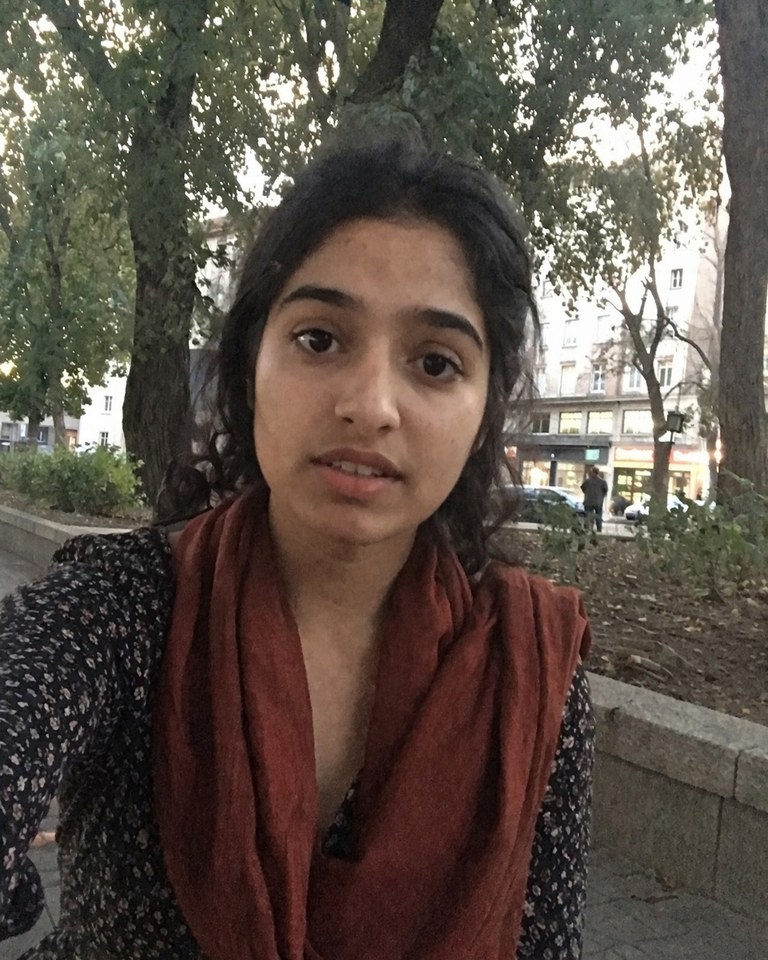
I want to start with a number that I think matters: PKR 0. That was my freelance income in September 2025. Zero clients, zero proposals sent, zero portfolio pieces. I was a final-year English Literature student at Punjab University's Old Campus in Lahore, sharing a room with my younger sister, doing assignments on a five-year-old HP laptop that took three minutes to boot.
Three months later, in December 2025, I earned $950. That's about PKR 265,000. Working 15-20 hours a week while finishing my degree.
I'm not saying this to brag — honestly, $950/month is modest compared to what experienced freelancers earn. But for a 22-year-old student in Lahore who had never earned a dollar before, it was the most significant thing that had happened in my life. And I think my story might be useful for other students or recent graduates in Pakistan who think freelancing requires years of experience or technical skills they don't have.
The starting point
Let me be specific about where I was in September 2025.
I was in my seventh semester at Punjab University, studying English Literature. My daily routine: take the Metro Bus from Ichra to the Old Campus stop, attend lectures on Victorian poetry and postcolonial theory, come home, study, sleep. Weekends I'd go to Anarkali with friends or study at the Quaid-e-Azam Library.
My "skills," as I understood them:
- I could write well in English (my professors consistently told me this)
- I could type fast (about 65 WPM)
- I had basic computer literacy — Word, Google Docs, PowerPoint
- I knew how to do academic research
That's it. I didn't know WordPress. I couldn't code. I had no design skills. I didn't even have a LinkedIn profile. When people in my class talked about freelancing, it always seemed to be about "web development" or "graphic design" — skills I didn't have and would take months to learn.
My family context matters too. My father is a government school teacher in Ichhra. He earns about PKR 85,000/month. My mother is a homemaker. I have two younger siblings — my sister is in FSc and my brother is in class 9. Money isn't dire, but it's tight. There's no room for expensive courses or wasted experiments.
When my parents heard "freelancing," they thought of the internet cafe scams that get reported on Geo News. My father specifically said: "these online earning schemes are all fraud." My mother was more diplomatic: "focus on your studies, get a teaching certificate, that's a real career."
They weren't wrong to be skeptical. Pakistan has a real problem with "earn money online" scams. But they were wrong that legitimate freelancing doesn't exist.
Why I enrolled anyway
I found SkillsToUSD through a Facebook post in a PU student group. Someone had shared a link to a free workshop video. I watched it during a break between classes, sitting on a bench outside the English department building with my earphones in.
Two things stood out. First, it specifically talked about content writing and SEO writing as a viable freelance skill — not just development and design. That mattered because those were the only skills I thought freelancing required. Second, it addressed the "no experience, no portfolio" problem directly, which was exactly where I was stuck.
I watched the workshop twice over two days. Then I looked at the pricing. The Starter plan was INR 2,999 — about PKR 10,200 at the current rate. I didn't have PKR 10,200 to spare from my monthly allowance. But my birthday was the following week (October 4th), and my family's tradition is that grandparents and uncles give cash. I usually got about PKR 12,000-15,000 total.
I enrolled on October 6th, two days after my birthday, using a portion of the birthday money. I didn't tell my parents what I'd spent it on. My mother thought I'd bought books.
I had no idea if it would work. I just knew that doing nothing guaranteed nothing would change.
Related: The skills audit and "credibility stack" profile method Fatima used are part of Pillars 1 and 3 in the SkillsToUSD program — specifically designed for beginners with no existing portfolio or freelance experience. See the Full Program →
Week 1: The skills audit
The first module was a skills audit, and it was genuinely eye-opening.
The exercise had me list every skill I had — not just "professional" skills but everything: academic writing, research, reading comprehension, communication, language fluency, analytical thinking, working under deadlines (university assignments), basic grammar and editing.
Then it mapped these against international freelance markets. Here's what I hadn't realized: strong English writing is a high-demand skill globally, not just an academic qualification. Businesses in the US, UK, and Australia need blog posts, articles, website copy, email newsletters, product descriptions, and social media content. Many of them outsource this work. And the quality bar isn't about having a literature degree — it's about being able to write clear, engaging, error-free English prose on a deadline.
I could do that. I'd been doing it for four years in university. My thesis supervisor, Dr. Amina, had told me my analytical writing was "among the strongest in the cohort." I just hadn't connected academic writing ability to market value.
The audit also helped me identify a specific niche. The course strongly advises against being a "general content writer" — that's the writing equivalent of being a generic WordPress developer on Fiverr. Instead, it walks you through selecting a specific type of writing for a specific type of client.
I chose blog writing for B2B SaaS companies. The logic: SaaS companies are always hiring writers, they pay relatively well, and their content needs (explaining complex software in plain English) matched my ability to break down complicated ideas — something I did constantly with literary theory.
I'll be honest: I didn't fully understand what "B2B SaaS" meant when I picked it. I learned as I went.
Week 2: Building a profile from nothing
The "credibility stack" method was the most practically useful thing in the entire course for me, because it directly addressed the chicken-and-egg problem: you need a portfolio to get clients, but you need clients to build a portfolio.
The approach works like this:
Layer 1: Writing samples. Write 3-4 blog posts as if you were writing them for a real client. Pick real companies (or realistic fictional ones), research their industry, and write the kind of content they'd publish. I wrote four articles:
- "5 Onboarding Mistakes That Increase SaaS Churn" (1,200 words)
- "How Small E-commerce Brands Can Compete With Amazon on Customer Experience" (1,500 words)
- "The Hidden Cost of Manual Invoicing for Growing Agencies" (1,000 words)
- "Why Your SaaS Free Trial Isn't Converting: A Checklist" (1,400 words)
I published these on Medium (free) and formatted them properly with headers, bullet points, and a professional author bio.
Layer 2: Profile construction. I created an Upwork profile using specific language patterns from the course. Instead of "I am a content writer looking for work" (which sounds desperate), my headline was: "Blog & SEO Content Writer for B2B SaaS | Clear, Research-Driven Articles That Rank and Convert."
Layer 3: Social proof signals. Even without clients, there are credibility signals you can build. I optimized my LinkedIn profile with the same positioning, shared my Medium articles, and wrote two LinkedIn posts about SaaS content strategy (informed by research, not experience). This gave my profile a "layer" of legitimacy beyond just the Upwork listing.
The total time investment for Week 2 was about 20 hours. I was still attending classes and submitting university assignments alongside this, so most of the freelance work happened between 9 PM and 1 AM.
Week 3: The first response
I started sending Upwork proposals in Week 3. The course has a very specific proposal framework, and I followed it almost word-for-word at first because I had no idea what I was doing.
Each proposal had three parts:
- A hook that referenced something specific about the client's business or job post
- A relevant writing sample (linked to my Medium articles)
- A clear statement of what I'd deliver, when, and for how much
In my first week of sending proposals, I submitted 18. Twelve went unanswered. Three got "thanks but no" responses. Two resulted in brief conversations that didn't go further.
One turned into something.
His name was Greg. He ran a content marketing agency in Portland, Oregon, and he needed writers for client blog posts. The work was straightforward: he'd send me a topic, a target keyword, and a brief. I'd write a 1,000-1,500 word blog post optimized for SEO. He wanted to start with a test batch of five articles.
The rate: $30 per article. I know that's low by US standards — experienced SEO writers charge $150-500 per article. But for me, it was $150 for five articles that I could write in about 15 hours. That worked out to $10/hour, which was already more than most entry-level jobs in Lahore pay.
More importantly, it was real. An actual client in the US was going to pay me US dollars for writing.
I accepted immediately.
Week 4: First payment
I wrote those five articles in eight days, working late at night after finishing my university reading. The topics were for one of Greg's clients — a project management SaaS tool. I wrote about remote team productivity, project planning frameworks, and meeting management. Ironically, studying literary criticism for four years had taught me exactly how to research a topic I knew nothing about and write about it authoritatively.
Greg's feedback on the first article: "Clean writing, good structure, just needs a few SEO tweaks — I'll send you our style guide." After that, revisions were minimal. Maybe 15-20 minutes of edits per article.
The $150 payment came through Upwork to my Payoneer account, then to my Meezan Bank account. The whole chain took about five days. I remember checking my bank balance on my phone while sitting in a linguistics lecture. PKR 41,800 was there. I'd earned it in eight days of part-time work.
I told my sister that night. She was skeptical until I showed her the bank notification. She said, "Ammi is going to say it's a scam." She was half right — when I eventually told my mother, her first reaction was "from where did this money come?" It took about a week of explaining before both parents cautiously accepted that this was legitimate.
SkillsToUSD includes the credibility stack method for building a profile from zero, proposal templates, SEO writing fundamentals, and a complete beginner-to-first-client roadmap specifically designed for students and career switchers. Starting at INR 2,999 with a 60-day money-back guarantee.
Month 2: Learning SEO and raising rates
Greg became a regular client. He sent me 8-10 articles per month, which was a steady base of $240-300. But the course emphasized not stopping at your first client, and I understood why — dependence on a single client is risky.
During Month 2, I focused on two things: learning SEO fundamentals and actively pitching new clients.
The SEO learning was self-directed but guided by the course's recommended resources. I learned about keyword research using Ubersuggest (free tier), on-page optimization (header structure, keyword placement, meta descriptions), and search intent — understanding why someone searches for a term and what kind of content answers their question. I also studied the top-ranking articles for keywords I was writing about, analyzing their structure and depth.
This wasn't university-level study. It was practical, applied learning. Within three weeks, I could do basic keyword research, structure an article for SEO, and write content that was genuinely optimized rather than just keyword-stuffed.
The tangible result: I raised my rate from $30/article to $60/article with new clients. Greg stayed at $30 for existing work, which I accepted because he gave me volume and predictable income. But new clients got the higher rate.
I also started including keyword research as an add-on service — for an extra $15 per article, I'd identify the target keyword myself instead of having the client provide it. This small addition made me more valuable because it reduced the client's workload.
By the end of Month 2, I was earning about $500/month: roughly $280 from Greg's articles and $220 from two smaller one-off clients I'd found on Upwork.
Month 3: The retainer that changed everything
In early December 2025, I applied to a job posted by an Australian SaaS company — a project management tool based in Melbourne. They needed a "consistent blog writer who understands B2B content and SEO." The budget listed was $400-600/month for 6-8 articles.
My proposal included links to the project management articles I'd written for Greg's client (with his permission — I asked first, and he was fine with it since the content was published under the end client's brand, not his). The relevance was direct: I had published articles about project management software. The hiring manager, a woman named Rachel, messaged me within two hours.
After a brief interview on Google Meet (my first video call with a client — I was nervous enough to practice my introduction three times beforehand), she offered me a retainer: $400/month for 6 articles on topics she'd provide, with the option to increase if the content performed well.
That $400/month retainer, combined with Greg's consistent work and occasional one-off projects, pushed me to $950 in December 2025. My third month of freelancing.
The practical details
Some specific things that I think other students in Lahore (or similar cities) would want to know:
Equipment: I still use my HP laptop. It's slow but it works for writing. I'm saving for a new one — probably an Acer from Hafeez Centre, around PKR 85,000 for a decent model. I work from my room at home, which I share with my sister. When I have client calls, she goes to the living room. It's not ideal but it works.
Internet: We have PTCL 15 Mbps at home, which costs PKR 2,500/month. It's sufficient for writing and video calls, though it drops occasionally during load shedding. I've learned to schedule client calls during non-peak hours.
Work schedule: I attend university from 8:30 AM to 2 PM most days (seventh semester has a lighter schedule). I study from 3-6 PM. Freelance work happens from 9 PM to midnight or 1 AM. Weekends I do 4-5 hours of freelance work, usually Saturday morning and Sunday evening.
Payment flow: Upwork processes payments weekly (Thursday in Pakistan). Money goes to Payoneer, then I withdraw to Meezan Bank. The whole cycle takes about 3-4 days. I haven't set up JazzCash yet but plan to. Currently I just use my bank debit card for daily purchases.
University impact: My grades have stayed consistent — I got a 3.2 GPA in seventh semester, same as sixth semester. I don't think freelancing has hurt my academics because I was spending those late-night hours on social media or Netflix anyway. Now I'm spending them on paid work.
Taxes: I haven't crossed the taxable income threshold yet, but I've registered with PSEB on the course's advice. When my income grows, I'll have clean records from the start.
What my parents think now
My father still calls it "online work," but his tone has changed. When I handed my mother PKR 30,000 last month for household expenses — the first time I've ever contributed to the family budget — she held the notes for a long moment and said something in Punjabi that roughly translates to "I didn't think this was possible."
She still worries. She asks if the "foreign people" can be trusted, if they'll actually keep paying me. She worries about me staying up late. She reminds me to focus on my degree. But the worry is different now — it's the worry of a mother who sees her daughter doing something she doesn't fully understand, not the dismissal of someone who thinks it's a scam.
My father mentioned to a colleague at his school that his daughter "does writing work for companies in Australia." He said it casually, like it was normal. For him, that's as close to expressing pride as he gets.
Fatima's Timeline
What I've learned — honestly
I want to end with some honest reflections, because I think it's important to not oversell what happened.
It wasn't easy. There were nights I wanted to quit — particularly in Week 3 when proposals went unanswered and I wondered if I'd wasted my birthday money. The doubt was real and constant. I still feel it sometimes when I open a Google Doc to start an article for Rachel's company — "what if this one isn't good enough?"
$950/month is a starting point, not an endpoint. I know freelancers who earn $5,000+/month. I'm not there. I'm a final-year student working part-time hours. But $950/month while studying full-time is something I couldn't have imagined four months ago. My plan after graduation is to go full-time and push toward $2,000-2,500/month by mid-2026.
The course didn't do the work for me. It provided a framework — the skills audit, the credibility stack, the proposal template, the niche selection logic. But I still had to write 40+ articles, send dozens of proposals, handle rejections, learn SEO on my own time, and manage clients while juggling university. The value of the course was in compressing the learning curve — showing me exactly what to do instead of spending months figuring it out by trial and error.
Writing is a real skill with real market value. This is the thing I most wish I'd understood earlier. In Pakistan, English literature is considered a "soft" degree — people assume you'll become a teacher or do nothing. But the global market doesn't see it that way. Clear, structured, engaging English writing is a skill that international businesses pay well for. If you can write well and you're not earning from it, the gap isn't your ability — it's your access to the right market.
I'm finishing my degree this spring. My thesis is on postcolonial identity in Mohsin Hamid's novels. Simultaneously, I'm writing blog posts about project management software and SEO strategy for clients in Portland and Melbourne.
These two worlds feel completely separate, but they draw on the same core skill: the ability to take a complex subject, understand it deeply, and communicate it clearly in written English. My literature degree taught me that. The freelancing ecosystem gave me a market for it.
I still take the Metro Bus to campus. I still eat paratha rolls from the vendor near the Old Campus gate. I still share a room with my sister. But something fundamental has shifted — I have agency. I'm earning my own money, contributing to my family, and building something that will only grow after graduation.
For PKR 10,200 and a lot of late nights, I think that's a reasonable trade.
Fatima K. is a B2B content and SEO writer based in Lahore, Pakistan. She writes for SaaS and technology companies in the US and Australia. She graduates from Punjab University in Spring 2026.
Your First USD Client Is 30 Days Away
Join 1,247+ South Asian freelancers earning internationally. The complete system includes 25 modules, 50+ templates, the Payment Bible, and weekly live Q&A.
Starting at INR 2,999 · 60-day guarantee · Lifetime access