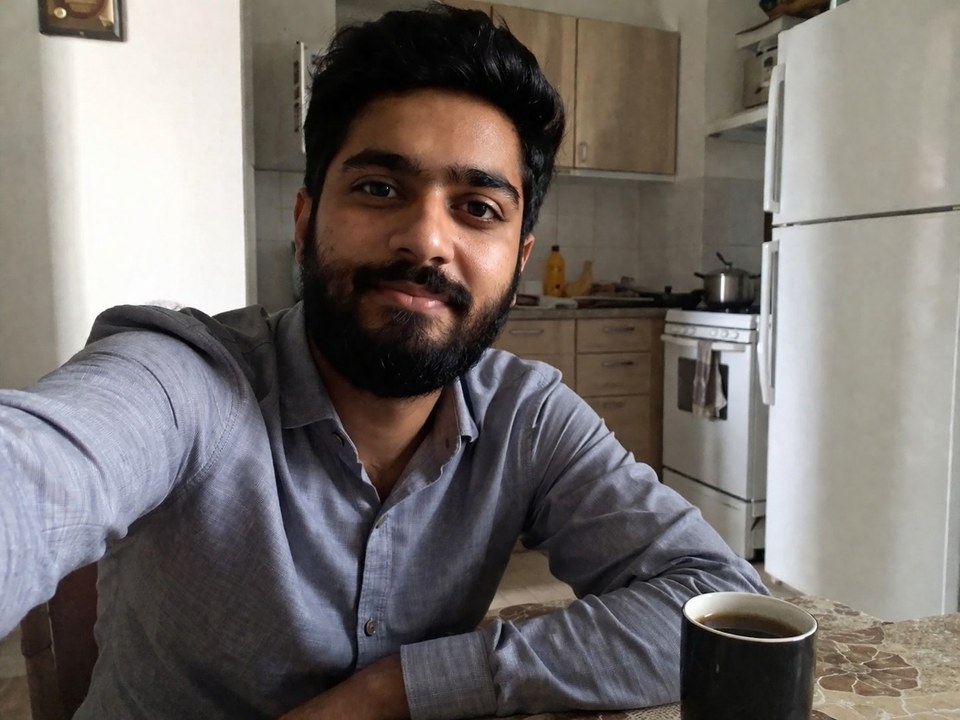
I have a computer science degree from NED University of Engineering and Technology — one of the most competitive programs in Pakistan. I graduated in 2021 with a 3.4 GPA. And for two years after that, I was fixing broken WordPress contact forms for $15 a pop on Fiverr.
I want to talk about that gap — between what I was capable of and what I was actually earning — because I think a lot of Pakistani developers live in it. You're technically skilled, you work hard, and somehow you're still earning less per hour than the chai wala outside your building. The problem isn't talent. It's positioning, and I didn't understand that until embarrassingly late.
Two years in the Fiverr grind
Let me give you the real numbers because I think transparency matters.
I created my Fiverr account in February 2022, about eight months after graduating. I'd spent those eight months applying for software engineering jobs in Karachi — sent out maybe 200 applications to companies in Clifton, I.I. Chundrigar Road, Shahrah-e-Faisal. Got four interviews. No offers. The job market in Pakistan for fresh CS graduates was brutal even before the economic situation got worse.
Fiverr felt like a backup plan. I listed "WordPress bug fixes" at $15 per gig, "WordPress customization" at $25, and "website speed optimization" at $20. These prices felt reasonable — I could see hundreds of other Pakistani and Indian sellers offering similar services at similar rates.
Over the next 24 months, here's what my Fiverr career looked like:
- Total orders completed: 287
- Total revenue (before Fiverr fees): $4,847
- Total revenue (after Fiverr's 20% cut): $3,878
- Average per order: $13.51 after fees
- Average monthly income: About $162/month (roughly PKR 45,000 at the time)
I was working 35-40 hours a week for this. Some orders were genuinely complex — database migration issues, WooCommerce payment gateway conflicts, theme compatibility problems that required digging through PHP files for hours. But because they were listed as "$15 bug fixes," that's what I earned regardless of complexity.
My profile had 247 reviews with a 4.9-star average. I was a Level Two seller. And I was still earning PKR 45,000/month. For context, a fresh graduate at a decent software company in Karachi starts at PKR 60,000-80,000. I had a degree from NED and two years of verified client work, and I was earning less than an entry-level hire.
The Upwork rejection
In early 2024, I tried to switch to Upwork. I'd heard the rates were better. I created a profile, listed my WordPress skills, submitted it for review.
Rejected. Reason: "insufficient qualifications to meet current demand."
That stung. I had a CS degree, 287 completed projects, and nearly 250 five-star reviews. But Upwork's profile approval process is opaque, and I later learned that they reject a high percentage of applicants in oversaturated categories. "WordPress developer" from Pakistan is one of the most oversaturated categories on the platform.
I tried again two months later with a slightly revised profile. Rejected again.
At this point, I was genuinely considering giving up on freelancing entirely. My father — he runs a small auto parts shop in Korangi — kept asking when I was going to "get a real job." My mother would mention relatives' sons who were working at Systems Limited or 10Pearls. The unspoken comparison was always there.
The WhatsApp forward
In April 2025, a friend from NED — Usman, who does mobile app development — shared a link in our batch WhatsApp group. It was a free workshop from something called SkillsToUSD. I almost ignored it. The group gets spammed with "earn money online" links constantly, and I'd learned to tune them out.
But Usman added a message: "bhai ye actually different hai, fiverr trap wala section dekho." So I watched the workshop video that night, sitting at my desk in our flat in North Nazimabad.
The part about the "Fiverr trap" was uncomfortably accurate. It described exactly what I'd been doing — listing generic technical skills at low prices, competing with thousands of identical profiles, and slowly burning out while earning less than minimum wage by international standards. The workshop made a point I'd never really articulated to myself: the platform incentivizes a race to the bottom, and you can't win a race to the bottom.
I enrolled in the Professional plan. INR 5,999 — about PKR 20,400 at the exchange rate. I paid via debit card. It was a significant amount for me at the time, but I figured I'd spent two years earning almost nothing, so what was another PKR 20,000 if it actually changed something?
Related: The "Fiverr Trap" analysis and niche selection matrix Ahmed used are covered in Pillar 1 of the SkillsToUSD program — designed specifically for South Asian freelancers stuck in low-rate platform cycles. See the Full Program →
The niche selection matrix
The first thing the course had me do was a skills and market analysis. There's a framework in the program called the "niche selection matrix" — basically a structured way to identify where your existing skills intersect with high-demand, high-value international work.
Here's how it worked for me. I listed out everything I could technically do:
- WordPress development and customization
- PHP/MySQL
- Basic React and Node.js
- WooCommerce setup and troubleshooting
- Some experience with Shopify (I'd done 3-4 Fiverr gigs involving Shopify Liquid templates)
- CSS/responsive design
- Site speed optimization
Then I mapped each skill against three factors: international demand (how many jobs are posted for this on Upwork), competition level (how many freelancers offer it), and average project value.
The insight was clear. "WordPress developer" had massive demand but equally massive competition, with average project values of $200-500. "Shopify developer" had strong demand, much less competition from South Asian freelancers, and average project values of $1,000-3,000. And "Shopify conversion optimization specialist" — someone who specifically improves Shopify stores to increase sales — had moderate demand, very low competition, and project values of $1,500-5,000.
I had enough Shopify and e-commerce knowledge to pivot. I didn't know everything, but I knew more than I'd been giving myself credit for. The gap between my existing skills and what a "Shopify conversion specialist" needed was maybe 20% — not 80%.
Building the proof
I spent two weeks building three spec Shopify stores. Not random demo stores — I picked specific niches where I wanted to work:
A fictional US-based protein supplements brand. I built the entire Shopify store from scratch, focusing on conversion elements: trust badges, urgency timers, optimized product pages with benefit-driven copy, and a streamlined checkout flow.
A fictional Australian skincare brand. Clean, minimal design with emphasis on mobile experience (I later learned 73% of Shopify traffic is mobile — this became a selling point).
A redesign concept for a real small Shopify store I found that had obvious conversion issues. I documented the "before" problems and my proposed solutions with annotated screenshots.
Each project had a detailed case study writeup: the problem, my approach, specific design and development decisions, and (for the spec stores) projected conversion improvements based on e-commerce benchmarks I'd researched.
Total cost to build these: about PKR 1,500 for a Shopify trial extension. The rest was time — roughly 60 hours over two weeks.
Getting back on Upwork
Here's the part that surprised me. I applied to Upwork again with my new positioning — not as a "WordPress developer" but as a "Shopify Conversion Optimization Specialist." My profile headline was: "I help DTC brands increase Shopify conversion rates through data-driven store optimization."
I was approved within 48 hours.
Same person. Same degree. Same technical skills. Different positioning. That was the moment it truly clicked for me — the platform hadn't rejected me before. They'd rejected another generic WordPress profile in an oversaturated category.
My first two weeks on Upwork with the new profile, I sent 22 proposals. Each one was tailored — I'd analyze the client's existing store, identify 2-3 specific conversion issues, and include a brief video walkthrough using Loom (free tier). This approach came from the proposal writing module in the course, and it was dramatically different from the generic "I can do this job" messages I used to send on Fiverr.
I got responses from four clients. Two led to interviews. One became my first Upwork project.
The first real project: $800
Marcus ran a supplements brand based in Austin, Texas. His Shopify store was doing about $12,000/month in revenue, but his conversion rate was 1.2% — well below the 2.5-3% industry average for supplements. He'd posted a job looking for someone to "fix my Shopify store and make it convert better."
My proposal included a 4-minute Loom video where I walked through his store, pointed out specific issues — slow mobile load time, cluttered product pages, a checkout flow that required account creation — and suggested concrete fixes. He later told me the video is what sold him.
The project scope: audit the store, redesign the product page template, optimize the checkout flow, improve mobile experience, and implement A/B testing via Google Optimize. I quoted $800. He countered with $750. I held at $800, explaining the scope and value. He accepted.
That $800 hit my Payoneer account three weeks later. Converted to PKR, it was approximately PKR 223,000. My total Fiverr earnings for the previous month had been $143.
I sat at my desk in North Nazimabad staring at the Payoneer notification for a full minute. Then I went to the kitchen and made chai. I didn't tell my parents yet — I wanted to make sure it wasn't a fluke.
Setting up payments in Pakistan
The payment setup deserves its own section because it's genuinely confusing for Pakistani freelancers.
Payoneer is the standard for Upwork payments. Setting it up wasn't difficult — the verification process took about a week with my CNIC and a bank statement. I connected it to my Meezan Bank account.
The withdrawal process works but it's not instant. Payoneer to Pakistani bank typically takes 2-3 business days. The exchange rate is decent — usually within 1-2 rupees of the interbank rate, which is better than the open market rates you'd get from a currency dealer in Saddar.
I also set up JazzCash as a secondary option for quick access to smaller amounts. You can transfer from your bank to JazzCash instantly, which is useful for daily expenses. I keep most of my earnings in the bank account and transfer a fixed monthly amount to JazzCash for spending.
One important thing: Pakistan requires freelancers to register with PSEB (Pakistan Software Export Board) for the IT & ITeS facilitation. The registration is free and takes about a week. Having the PSEB certificate also helps with tax filing — freelance IT income has a reduced tax rate under the current incentives. I filed my taxes properly from the start, and I'd recommend anyone reading this do the same. It's not complicated, and it protects you long-term.
SkillsToUSD includes country-specific payment guides for Pakistan (Payoneer, Wise, JazzCash, bank integration), PSEB registration walkthroughs, proposal templates with video audit frameworks, and the full niche selection matrix. Starting at INR 2,999 with a 60-day money-back guarantee.
Scaling from $800 to $3,800/month
After Marcus's project, things started compounding. Here's the progression:
Month 1: Marcus's store project ($800) plus one smaller Shopify optimization job ($350). Total: $1,150.
Month 2: Marcus referred me to another supplements brand owner he knew in the US. That project was $1,200. Plus a new Upwork client — a women's fashion brand in the UK — for $600. Total: $1,800.
Month 3: I raised my rates. New proposals quoted $1,000-1,500 for conversion optimization projects. Landed two projects at $1,100 and $900. Marcus also put me on a $400/month retainer for ongoing optimization and A/B test management. Total: $2,400.
Month 4-5: Things stabilized. I landed Top Rated status on Upwork (requires 90+ days, $1,000+ in earnings, and high JSS). My Job Success Score hit 98%. At this level, clients start finding me through Upwork search rather than me chasing proposals. I currently have two retainer clients and take on 2-3 project-based jobs per month.
Current monthly average: $3,800 — approximately PKR 1,060,000.
I want to be clear about something: this didn't happen passively. I work 40-45 hours a week. I spend time every week learning — Shopify updates their platform frequently, and conversion optimization is a field that requires you to stay current. I've invested in tools: Hotjar for heatmaps (about $39/month), a Figma Pro subscription ($15/month), and a better internet connection (upgraded from my old PTCL DSL to StormFiber — PKR 4,500/month for 75 Mbps).
What actually changed
Looking back, the technical skills I use today are maybe 30% different from what I had when I was on Fiverr. I've deepened my Shopify Liquid knowledge, learned more about conversion rate optimization frameworks, and gotten much better at client communication. But the core web development skills? I had those at NED.
What changed was everything around the skills:
Positioning: "WordPress bug fixer" vs. "Shopify conversion optimization specialist." Same person, completely different market perception and price point.
Proof: Three well-built spec projects that demonstrated specific, high-value capabilities instead of a Fiverr portfolio of $15 fix screenshots.
Platform strategy: Upwork with a specialized profile vs. Fiverr with a generic one. The platforms have different economics — Upwork rewards specialists, Fiverr rewards the cheapest option.
Proposal approach: Custom video audits showing the client I'd already analyzed their problem, vs. template messages saying "I can do this job."
Pricing confidence: Quoting $800-1,500 per project instead of $15-25. This was honestly the hardest part — the psychological barrier of asking for real money. The course helped with frameworks for calculating and communicating value, but ultimately I just had to do it and see that clients would say yes.
Ahmed's Timeline
My father's auto parts shop
I mentioned my father runs a small auto parts shop in Korangi Industrial Area. Last month, he had a slow week — his monthly revenue was about PKR 80,000, which is a decent month for him. My freelance income that same month was PKR 1,060,000.
I didn't tell him the exact number. I don't want to make him feel bad about his work — he's been running that shop for 22 years and put me through NED on its income. But I did tell him I'm earning well, and I'm going to help with the family expenses. Last month I covered my younger sister's university tuition fees (she's at FAST-NUCES, second year) and gave my mother money for the household budget.
My father doesn't fully understand what I do. When relatives ask, he says "computer work for foreign companies." That's close enough.
I've moved from my parents' flat in North Nazimabad to my own apartment in Gulshan-e-Iqbal — Block 13A, a one-bedroom place with a proper workspace. I have a standing desk, a 27-inch monitor, and reliable StormFiber internet. The rent is PKR 35,000/month, which would have been unimaginable a year ago.
Honest caveats
I don't want this to sound like everything is perfect. Some things that are genuinely hard:
Time zones: Most of my clients are in the US (CST/EST), which means I often work late evenings and nights Pakistan time. This affects my social life and sleep schedule.
Income variability: $3,800 is my average. My lowest month was $2,100 (one client paused their project). My highest was $4,600. Freelancing doesn't have the predictability of a salary.
Isolation: I work alone from my apartment. I miss having colleagues. I've started going to a coworking space in Shahrah-e-Faisal once a week just to be around other people.
Imposter syndrome: It's still there. When a US client hires me for $1,500, there's a voice that says "they could get a developer in Austin for this." I have to actively remind myself that they chose me because my work is good and my rates are fair for the value I deliver.
But these are the problems of someone earning a good living, not the problems of someone struggling to survive. I'll take them.
Ahmed K. is a Shopify conversion optimization specialist based in Karachi, Pakistan. He works with DTC e-commerce brands in the US, UK, and Australia. You can find his profile on Upwork.
Your First USD Client Is 30 Days Away
Join 1,247+ South Asian freelancers earning internationally. The complete system includes 25 modules, 50+ templates, the Payment Bible, and weekly live Q&A.
Starting at INR 2,999 · 60-day guarantee · Lifetime access